APT Properties
A site for a real-estate agency, built in React and Vite. I designed the interface and the back end: a secure database with login, an admin mode the owner uses to manage listings, and Google Maps and Yelp APIs. Live at aptestates.com.
The brief
A real-estate business needed a site to show their properties, and needed to be able to keep it current themselves. That second requirement shaped the build: a listings site only its developer can update goes stale quickly.
So there's more behind it than a front end. Listings live in a secure database, the owner signs in to an admin mode to add and edit them, and the React front end reads from the database. What visitors see is whatever the client last entered.
It also does a little more than list: Google Maps and Yelp APIs plot each property and surface the highlights nearby, so a listing page also answers what's around it.
Decisions
-
The agency manages its own listings
Visitors see the public pages, but the screen that keeps the site useful is the one the owner signs into. Properties live in a secure database behind an admin mode with a login, and she adds and edits them without me.
-
Built around its two locations
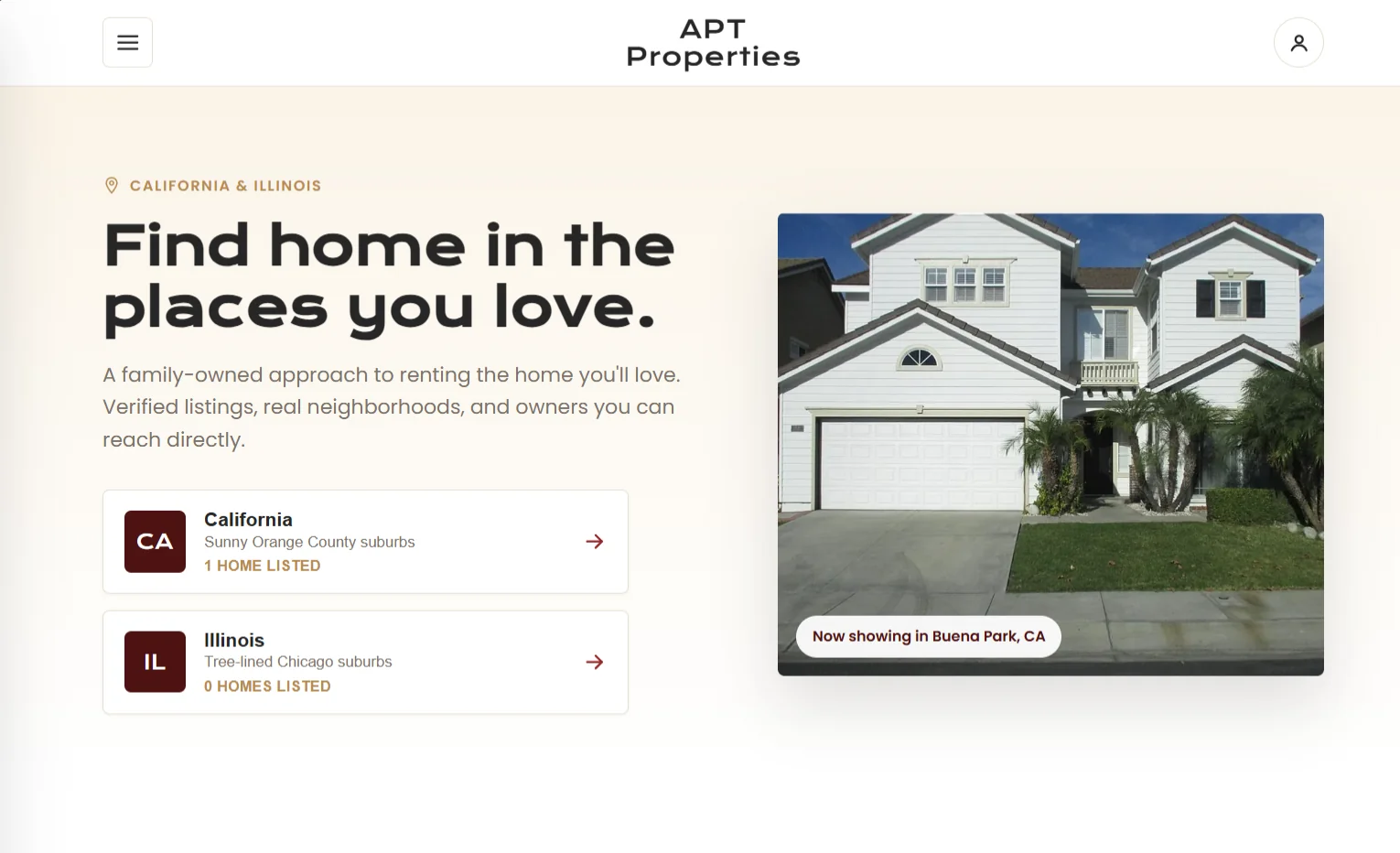
The agency only lists properties in two areas, California and Illinois, so rather than open with a generic search field, the landing page highlights those two locations up front, each with its own card. Visitors go straight to where the homes actually are, which keeps the search streamlined and the experience focused on what the client offers.
-
Built in React and Vite
The front end is React with Vite, which keeps the interface quick and the code easy to extend as the agency adds listings and features. Google Maps and Yelp APIs layer on the nearby context, and a secure database holds the listings behind the admin login.
Where it stands
Built and live at aptestates.com. The agency uses the admin mode to keep their listings current, and they're happy with where it's got to.
Along the way, feedback came as a list of other sites whose design they liked. That's normal, and it's useful once it's translated: pointing at finished work is easier than naming the quality you're after. The job was working out which quality that is, rather than copying the page.